
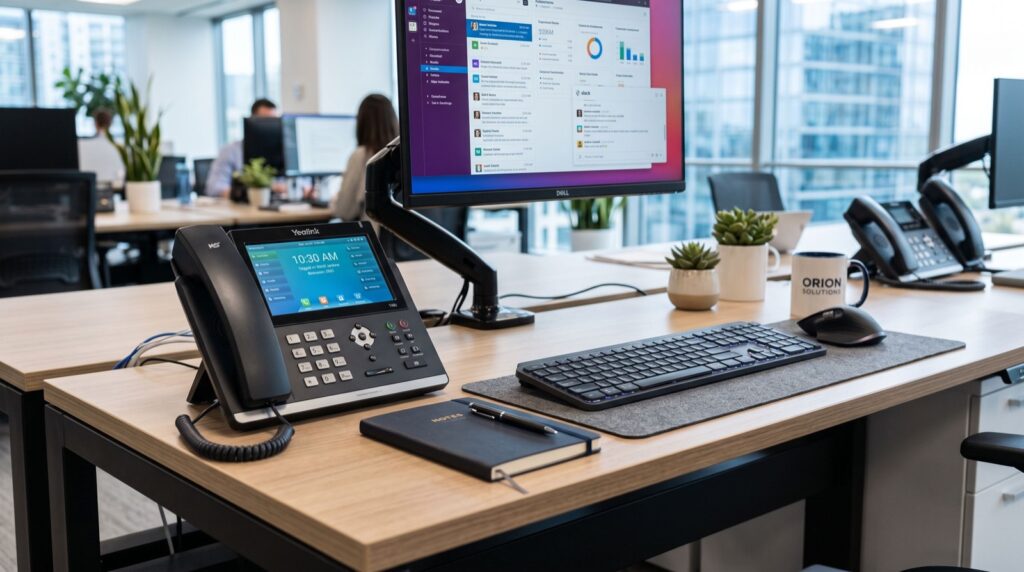
Fanvil IP Phones in Pakistan: A Practical 2026 Buying Guide
Choosing business phone hardware feels deceptively simple until you open a spec sheet, which is why a clear-eyed guide to Fanvil IP Phones in Pakistan saves buyers from expensive guesswork. Whether you run a growing call centre in Karachi, a legal firm in Islamabad, or a distribution office in Faisalabad, the phone on the desk shapes daily productivity more than most owners realise. This guide breaks down what actually matters, how to compare tiers, and how to calculate true cost of ownership before you commit.
The goal here is not to push the priciest model. It is to help you match the hardware to your workflow so you never pay for keys you will not press or, worse, under-buy and cripple a busy front desk.
What Is an IP Phone, in Plain Terms?
An IP phone looks like an ordinary desk telephone but sends your voice as data packets over the internet instead of down a dedicated copper line. It registers to a PBX using the SIP protocol, gaining features that analog phones simply cannot offer: on-screen directories, one-touch transfers, presence indicators, and remote management.
For a Pakistani business, the practical upshot is lower call costs, easier expansion, and a phone system that behaves like software you can tune rather than hardware you are stuck with.
The Three Buying Tiers Explained
IP phones broadly fall into three tiers. Understanding them stops you from over-spending on reception and under-spending on the managing director.
Entry Tier
Two-line phones with a compact body and a simple screen. These suit high-volume desks, hot-desking pools, and any role where the staffer mostly answers and transfers. They are the cost-efficient backbone of most deployments.
Mid Tier
Colour screens, four or more SIP accounts, and a bank of programmable keys. Sales teams and supervisors live here because busy-lamp keys let them see who is free before transferring a client.
Executive and Specialist Tier
Large touch displays, Bluetooth, Wi-Fi, and expansion modules for reception consoles. Also in this bracket sit specialist devices like the cordless Fanvil W610W for staff who need to take calls while moving around a large premises.
Tier Comparison Table
| Tier | Typical SIP accounts | Programmable keys | Ideal user |
|---|---|---|---|
| Entry | 2 | Few | Reception, call floor |
| Mid | 4 | Several | Sales, supervisors |
| Executive | 6+ | Many + expansion | Directors, front desk |
| Cordless / Wi-Fi | 2 | Soft keys | Roaming staff |
How Do You Calculate the True Cost of an IP Phone System?
Sticker price is only the first line of the budget. Total cost of ownership tells the real story, and it usually favours VoIP heavily over the second year.
- Hardware: the one-time cost of handsets plus a PoE switch.
- Platform: either a monthly hosted PBX fee or a one-off on-premise server.
- Trunk minutes: per-minute SIP rates, which are far lower than analog, especially internationally.
- Power and network: a UPS for the switch and router to survive outages.
- Support: either an internal admin’s time or an integrator’s retainer.
Because internal and inter-branch calls cost nothing over a SIP network, most offices see the switch and handsets pay for themselves within a year. To get the numbers right for your traffic, it helps to involve dependable specialists who can size the system to your real call volume rather than a guess.
One number owners often overlook is the cost of downtime. An analog line that fails takes days to repair and leaves the business unreachable. A SIP system reroutes instantly to a mobile app or a backup extension, so a fault becomes an inconvenience rather than a lost day of sales. When you weigh total cost, factor in that resilience alongside the raw call rates.
A Simple Payback Example
Picture a Karachi office of ten staff that made heavy use of PTCL lines and international calls. Moving to SIP trunks typically cuts the monthly call bill by half or more, while the free internal calling removes inter-branch charges entirely. Against a one-time hardware spend, most businesses in this profile reach break-even inside twelve months and pure savings after that.
Features Worth Paying For in 2026
Some features look like marketing gloss but genuinely change how a team works. Prioritise these when you compare models.
- PoE: one cable for power and data cleans up every desk.
- HD wideband audio: clearer calls reduce misheard orders and repeated numbers.
- Gigabit pass-through: the phone and PC share a single wall port at full speed.
- Auto-provisioning: the PBX configures new phones automatically, which matters at scale.
- Expansion modules: a reception console adds dozens of monitored lines.
Matching the Platform to Your Hardware
The phones are only half the decision; the PBX behind them shapes the experience. Businesses in Pakistan generally pick one of two routes, and each suits a different appetite for control and up-front spend.
- Hosted cloud PBX: low up-front cost, no server to maintain, and features updated automatically. Ideal for smaller teams that value simplicity.
- On-premise PBX: a one-time server cost, full control of call data, and no monthly platform fee. Better for larger offices with an in-house admin.
Because Fanvil handsets follow the open SIP standard, you can start on a hosted platform and migrate to on-premise later without replacing a single phone. That flexibility protects your hardware investment as the business grows.
Common Buying Mistakes to Avoid
Experience across deployments in Lahore and Karachi surfaces the same avoidable errors again and again.
- Ignoring the network: the best phone still sounds bad on a congested link with no QoS.
- Skipping the UPS: a power cut then silences the whole office, undoing the reliability gain.
- Buying one tier for everyone: reception is overpaid and managers are underserved.
- Forgetting spares: a pre-provisioned backup handset keeps the front desk live when one fails.
VoIP adoption keeps climbing worldwide because the economics are so favourable; industry analysis from bodies such as the International Telecommunication Union tracks the steady global shift from circuit-switched to IP-based voice, a trend Pakistani businesses are now firmly part of.
Frequently Asked Questions
Are IP phones hard to manage for a small business?
No. A web interface handles a single phone, and auto-provisioning handles many. Most owners find them easier to manage than analog lines once the initial setup is done.
Do I need to keep my old PTCL line?
Usually not. Many businesses port their existing number to a SIP trunk, though some keep one analog line as an emergency fallback for absolute peace of mind.
Which tier should a ten-person office buy?
Typically a mix: entry-tier phones for general staff, a couple of mid-tier units for supervisors, and one executive or reception console for the front desk.
Can Fanvil phones work with cloud PBX services?
Yes. They follow the open SIP standard, so they register with hosted cloud PBX platforms as easily as with an on-premise server.
Conclusion
Buying wisely comes down to matching tier to task, respecting the network, and reading total cost of ownership rather than the sticker alone. Do that, and Fanvil IP Phones in Pakistan deliver a phone system that scales with you, cuts your call bills, and keeps every desk sounding sharp. Map your roles, size the system with a trusted specialist, and invest once in hardware that works the way your business actually runs.